1. The Artistic Vision
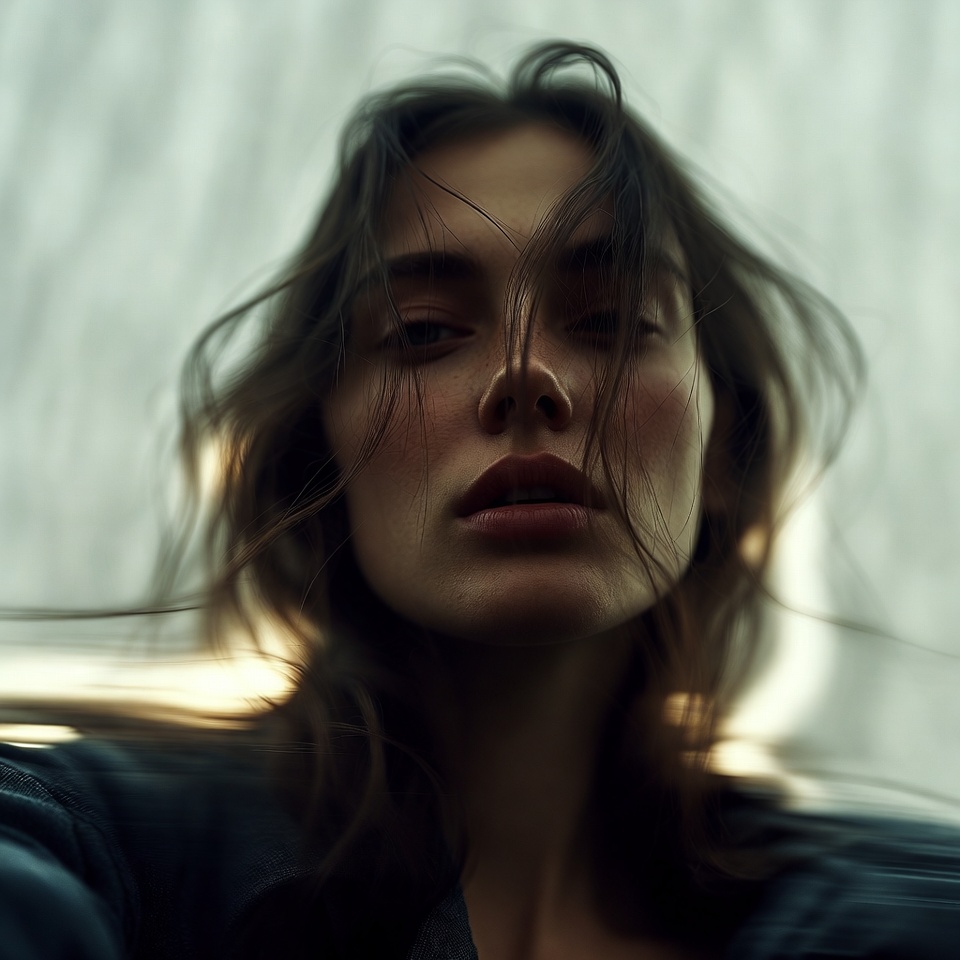
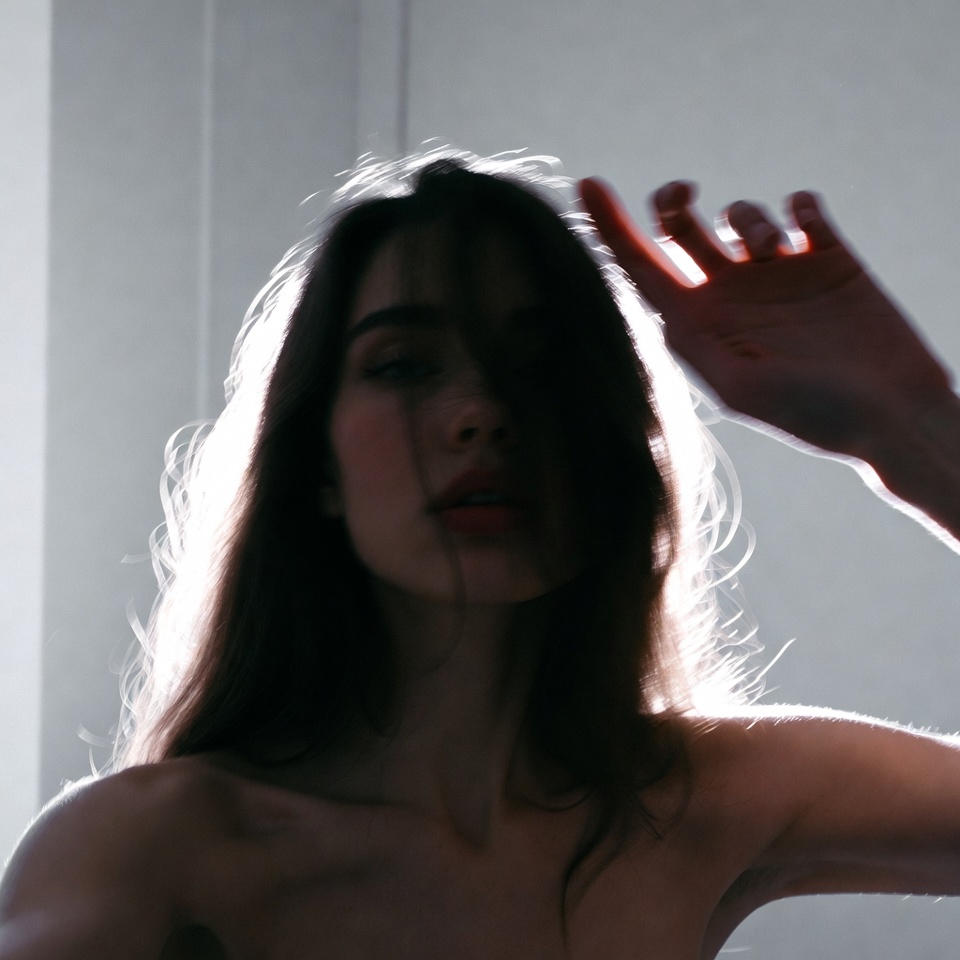
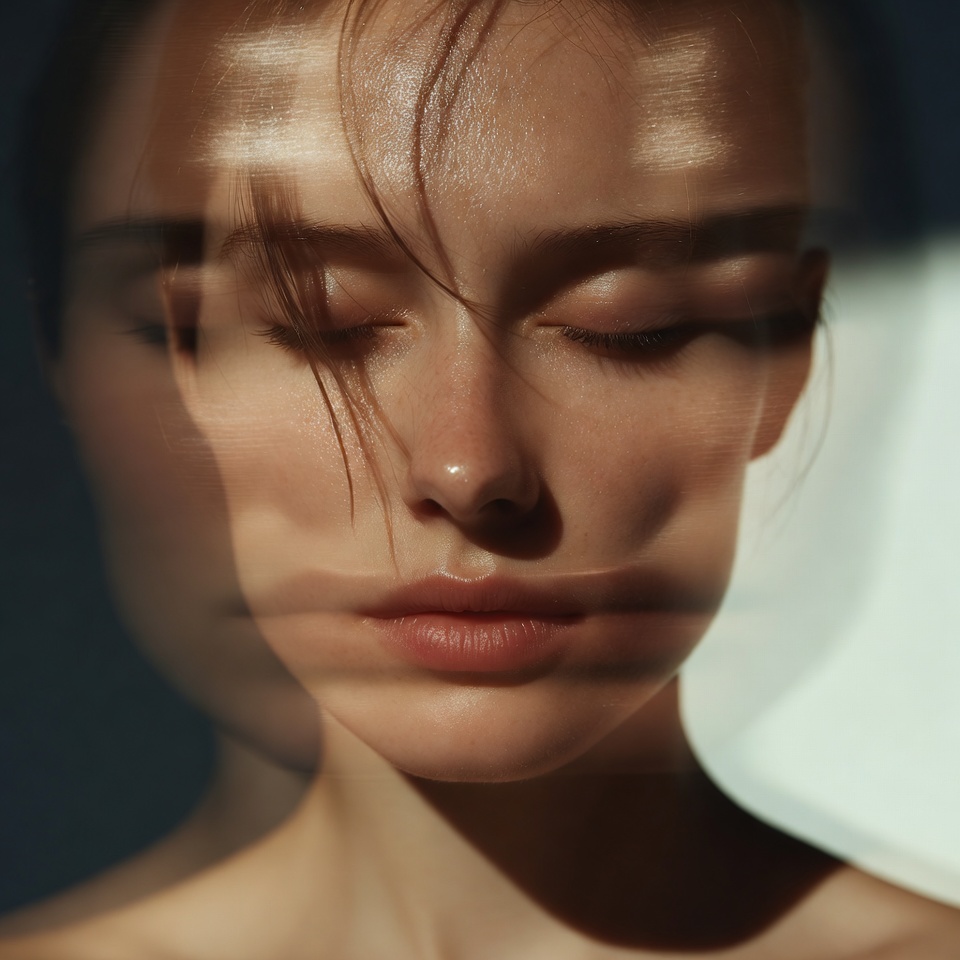
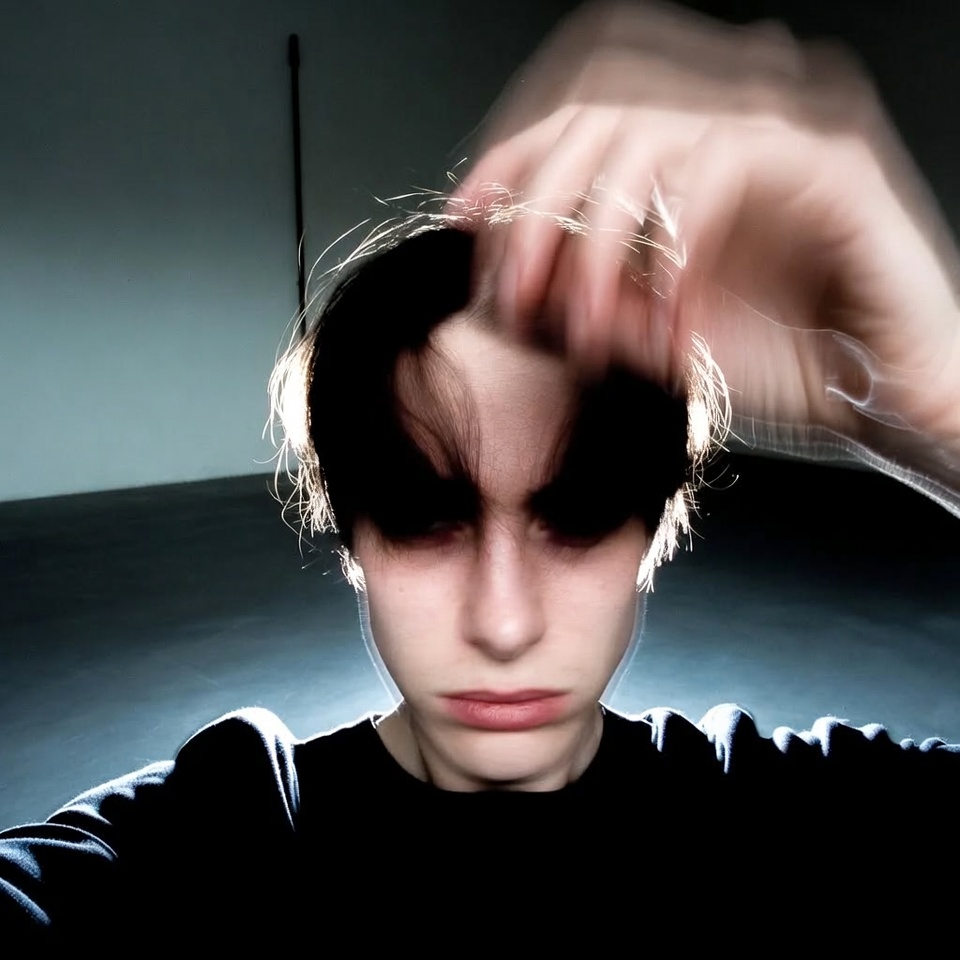
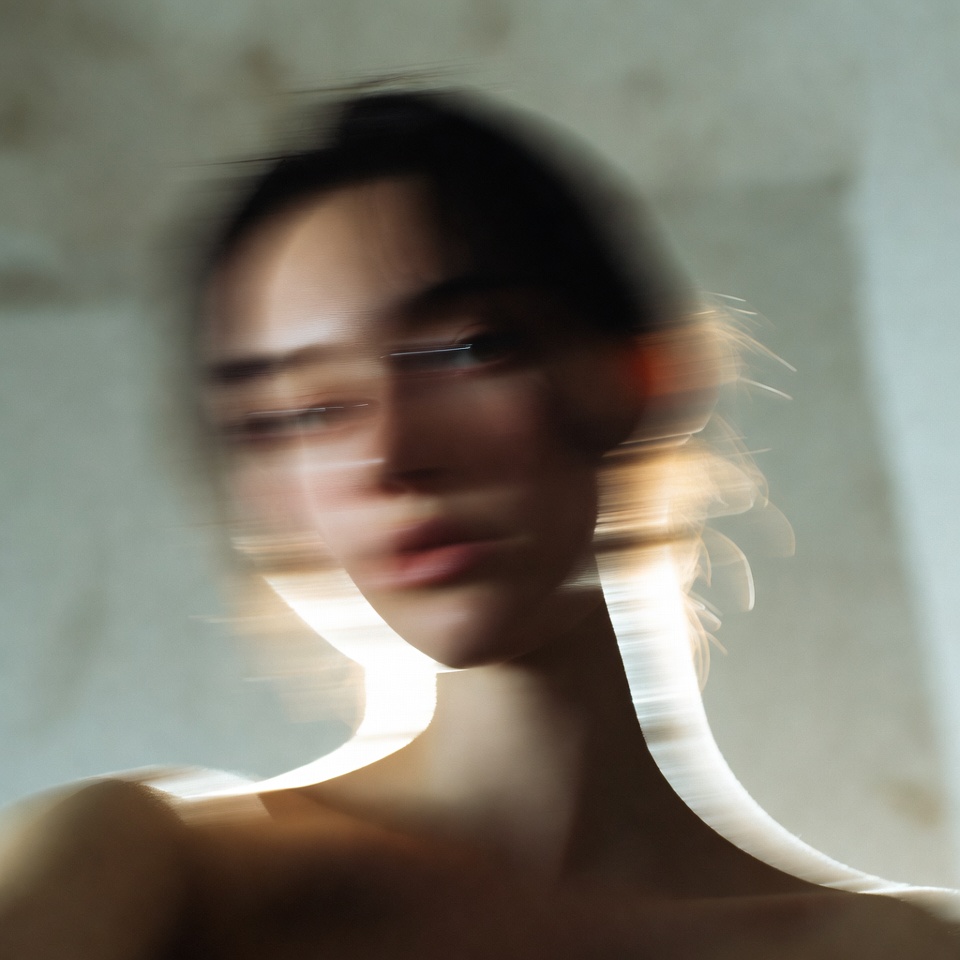
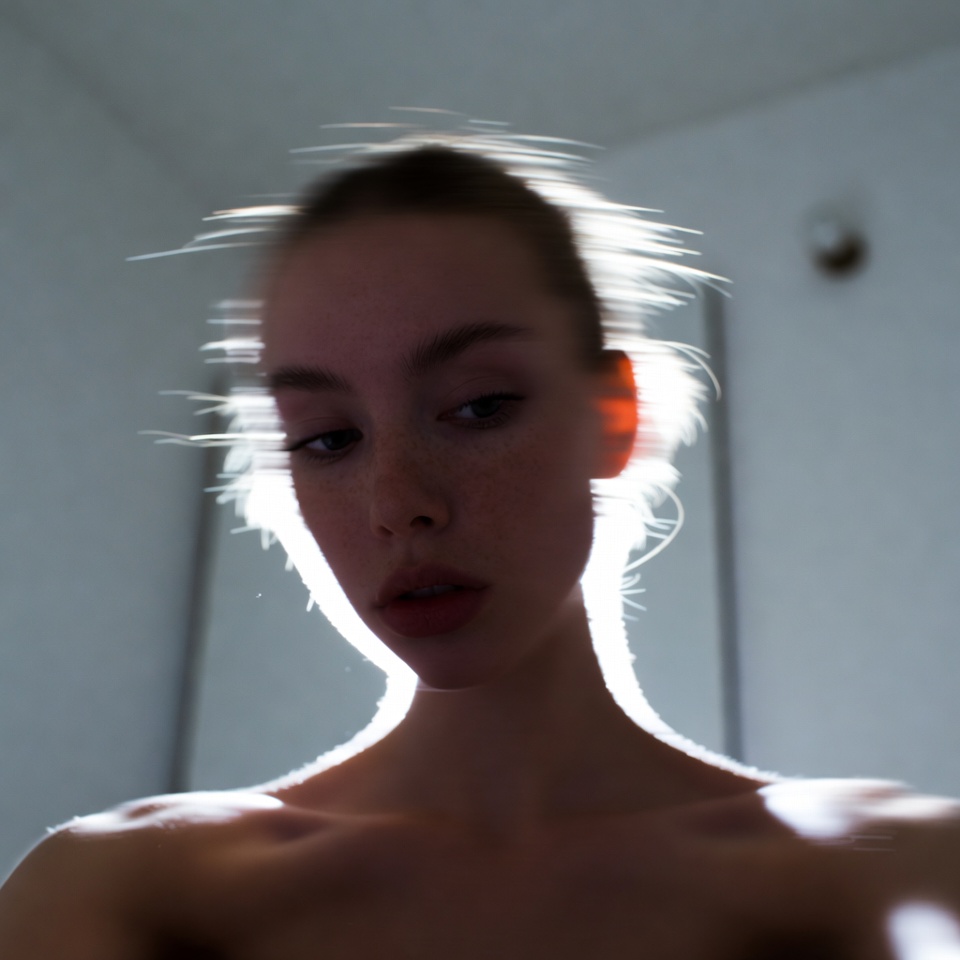
Motion Blur is emotion made physical: time smearing across the frame like a thought you can’t hold still. When you pair that with a rim light (backlight), the subject becomes a glowing outline against the dark almost spectral while the interior detail fades into softness. That’s melancholic language in pure optics: presence at the edges, absence in the middle.
A Selfie Angle brings uncomfortable intimacy close distance, slight perspective tilt, and the sense of a private moment captured without a crew. Then Center Symmetrical composition imposes order on the chaos: the frame feels controlled, but the blur reveals instability underneath. That tension is exactly where melancholy lives.
2. The Master Prompt (Copy-Paste Ready)
3. Anatomy of the Shot (Technical Deep Dive)
Why this Lighting? (Rim Light / Backlight)
Rim light is separation lighting: it draws a bright contour along hair, shoulders, and cheek edges when the light sits behind the subject.
- Silhouette authority: even when motion blur reduces facial detail, the rim defines identity through outline.
- Melancholic symbolism: backlight reads like distance sunset, doorway glow, streetlamp haze light you’re walking away from.
- Depth cueing: it pushes the subject forward from the background, which is crucial when blur can otherwise flatten the scene.
Control note: If the rim overwhelms and “burns out,” reduce intensity or specify “soft rim” or “diffused backlight” while keeping the backlit direction.
Why this Angle? (Selfie Angle)
Selfie angle typically means close camera distance and slight top-down or arm’s-length perspective an intimacy that feels immediate.
- Psychological proximity: the viewer reads it as unguarded, personal, and slightly vulnerable.
- Perspective tension: small distortions (hands closer, face subtly widened) can amplify emotional fragility useful for melancholy.
- Documentary authenticity: it feels like a real moment rather than a posed studio portrait.
Refinement cue: If distortion gets too strong, specify “arm’s length selfie, minimal wide-angle distortion” (optional) while keeping “Selfie Angle.”
Why this Composition? (Center Symmetrical)
Center symmetry creates ritualistic calm an almost icon-like framing.
- Stability vs. smear: symmetry anchors the eye while motion blur introduces drift, making the image feel like controlled heartbreak.
- Graphic readability: the subject becomes a central totem; rim light becomes a halo-like outline.
- Instant editorial impact: symmetrical portraits read as deliberate and high-design.
Implementation: Align the head/torso on the centerline; mirror background elements (doorways, corridor lights, windows) to reinforce symmetry.
4. Color Palette & Aesthetics
Suggested Color Palette (Melancholic Backlight):
- Deep navy / charcoal shadows
- Cool white or pale cyan rim (streetlight / moonlit edge)
- Optional warmth: faint amber spill in the far background (nostalgia without breaking the mood)
Textures to expect (or encourage):
- Glow bloom around highlights (subtle)
- Fine grain for atmosphere
- Background materials: wet asphalt, fogged glass, matte concrete, dark curtains
5. Pro Tips for Refinement
Tip 1 (Stylization + Blur Control):
- Motion blur can get messy fast. To keep it cinematic:
- Lower
--stylizeif blur turns into painterly artifacts:--stylize 75–150. - Add directional intent (optional) like “horizontal motion blur” or “subtle camera shake blur” to avoid random smearing.
- Lower
- If adapting to Stable Diffusion: generate sharp first, then apply motion blur via img2img or post-process; it preserves facial structure while still selling movement.
Tip 2 (Subject Matter):
- Melancholy reads best with stillness inside movement: relaxed mouth, distant eyes, soft brows.
- Wardrobe that catches rim light: dark coat, hoodie, turtleneck, or slick hair anything that creates a clean edge highlight.
- Environment that supports symmetry: hallways, tunnels, stairwells, door frames, subway platforms.
6. FAQ (Rich Snippet Optimized)
Q: Can I use this prompt for a non-selfie cinematic portrait?
A: Yes replace “Selfie Angle” with “eye-level portrait” or “3/4 view,” keep rim light and symmetry, and reduce motion blur intensity for a calmer editorial look.
Q: What creates the Melancholic feeling in this shot?
A: The melancholy comes from backlit rim separation (distance + isolation), symmetry (controlled restraint), and motion blur (time slipping) a visual equation for emotional drift.