1. The Artistic Vision
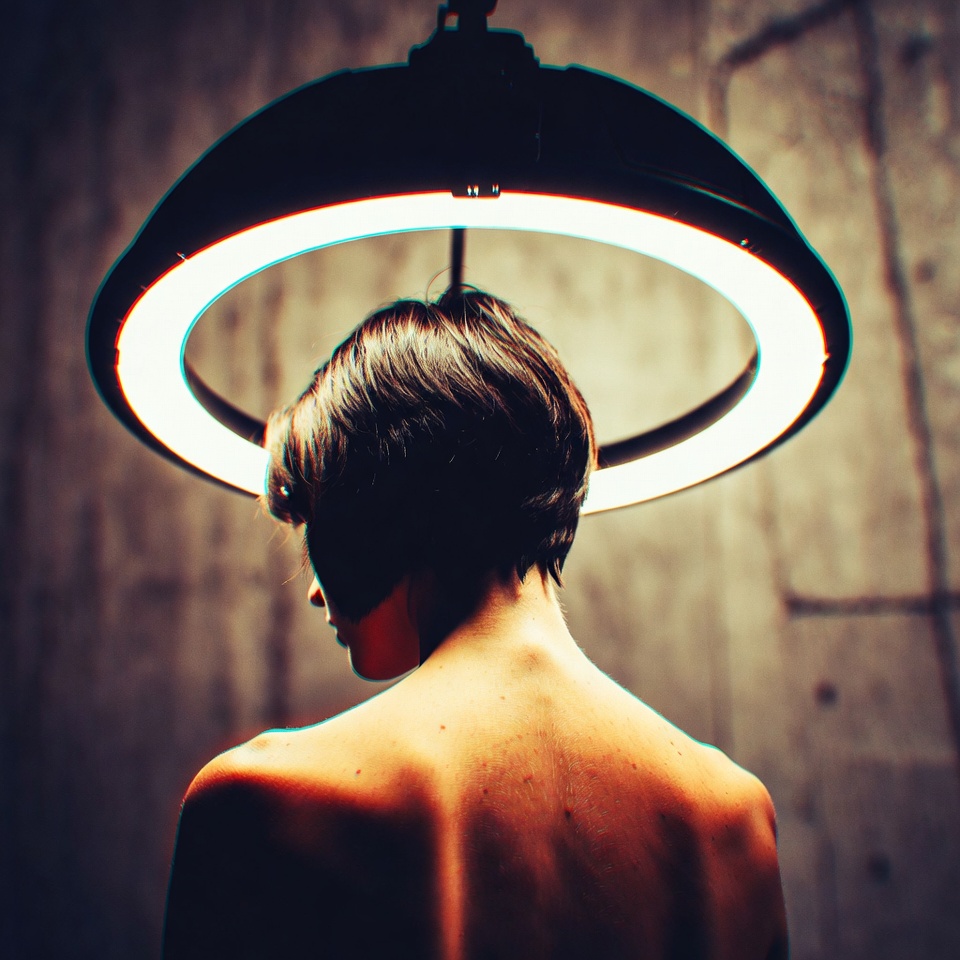
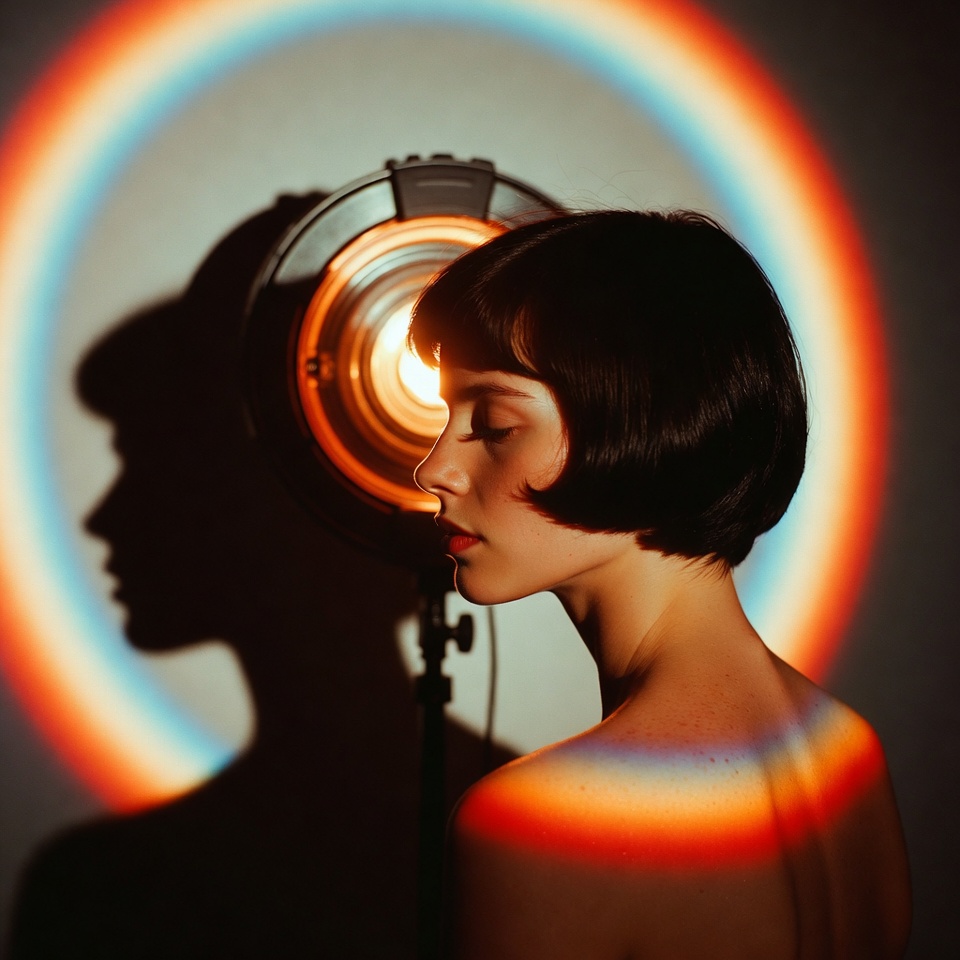
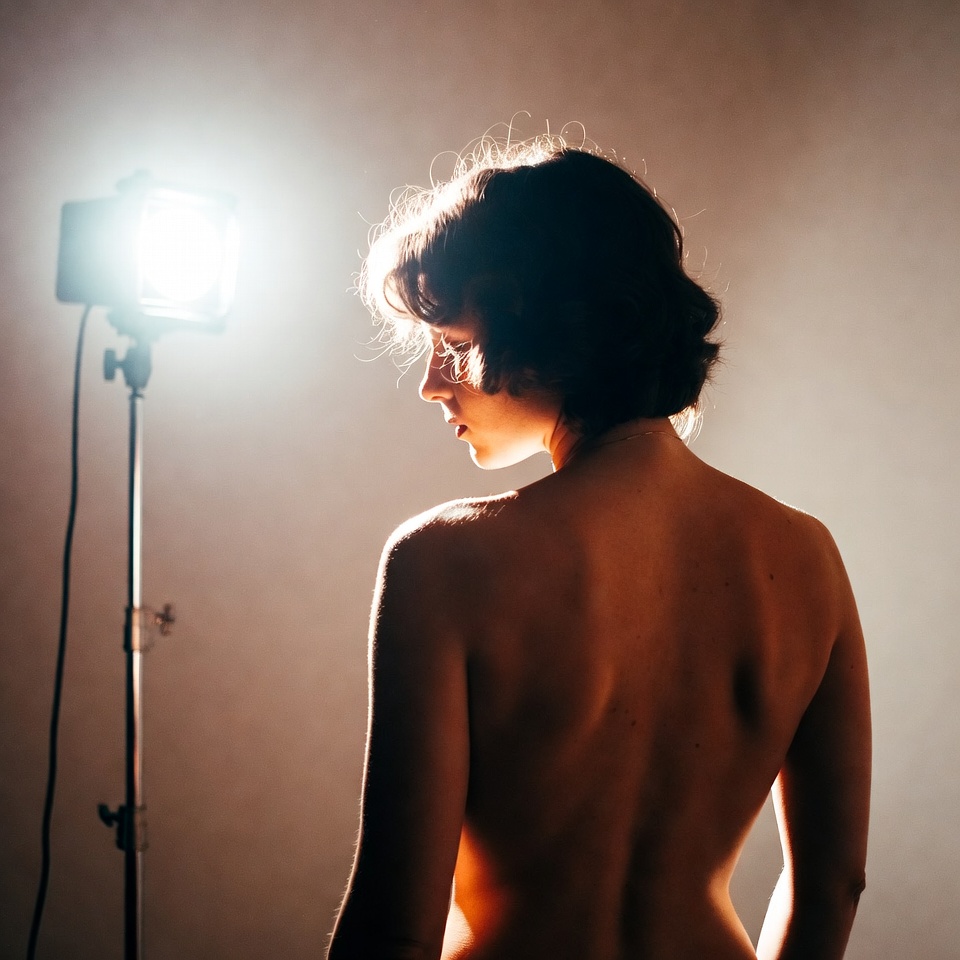
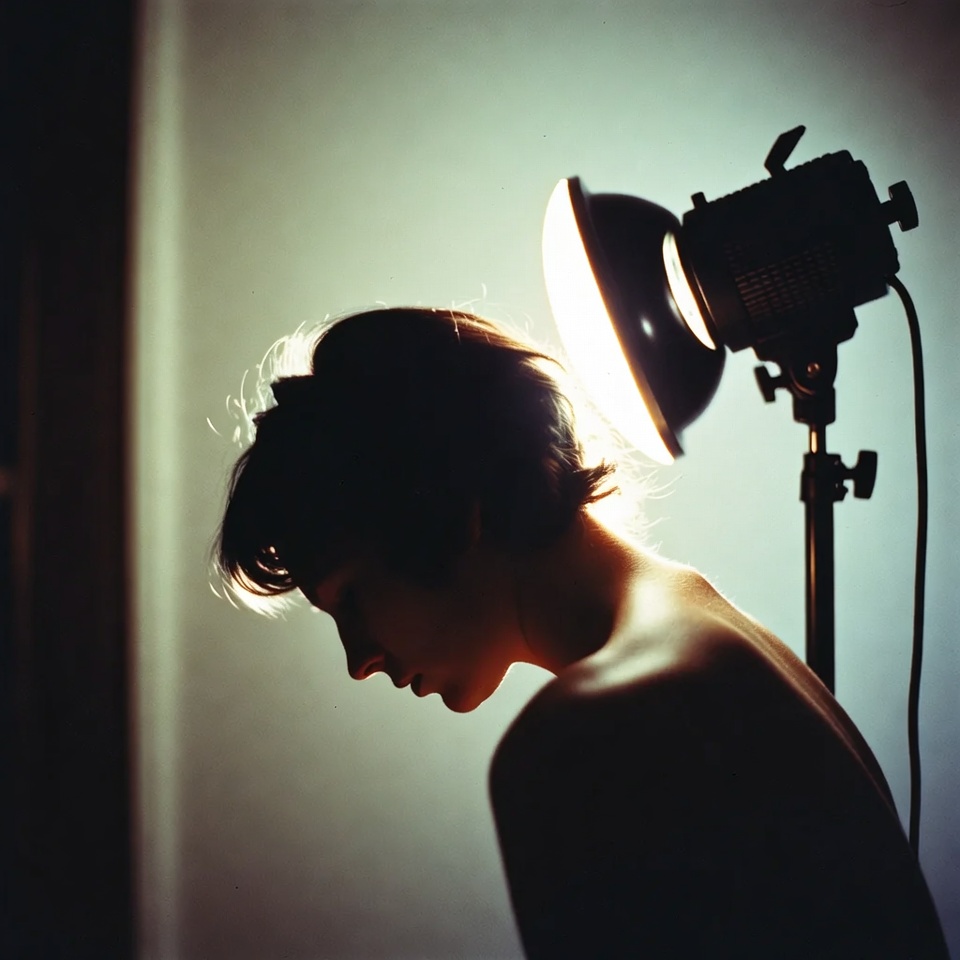
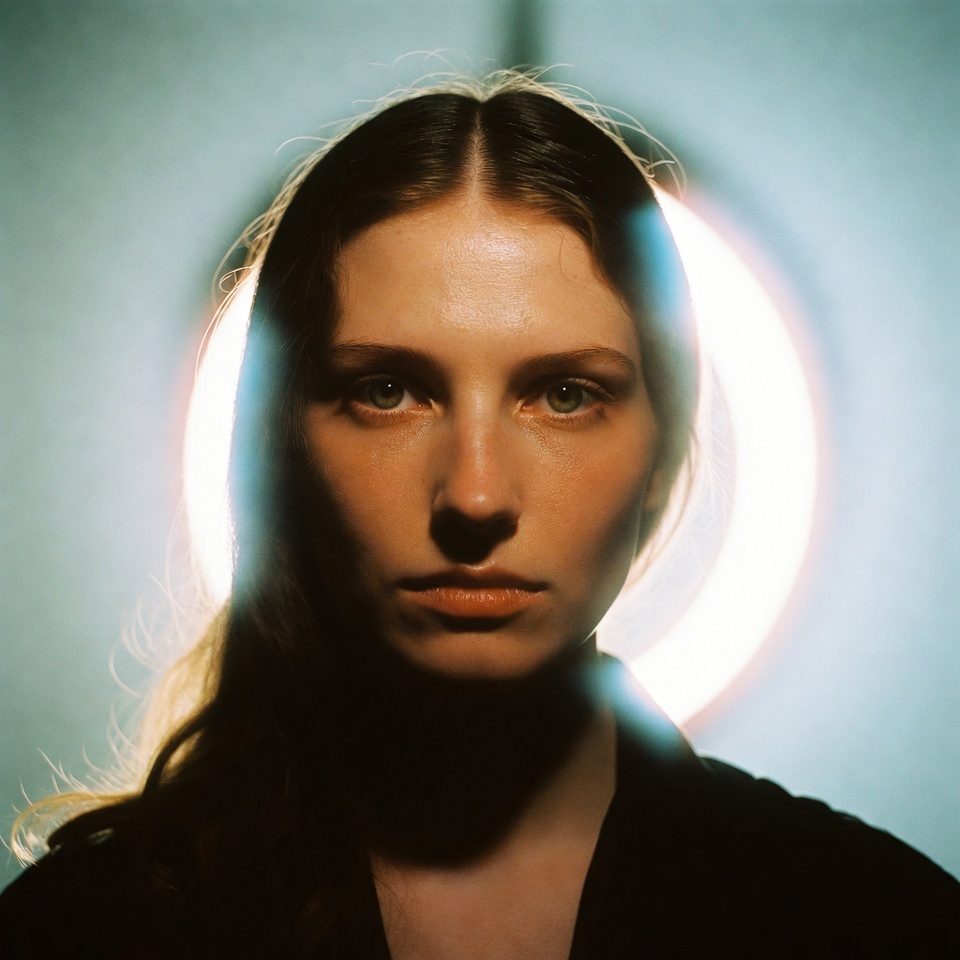
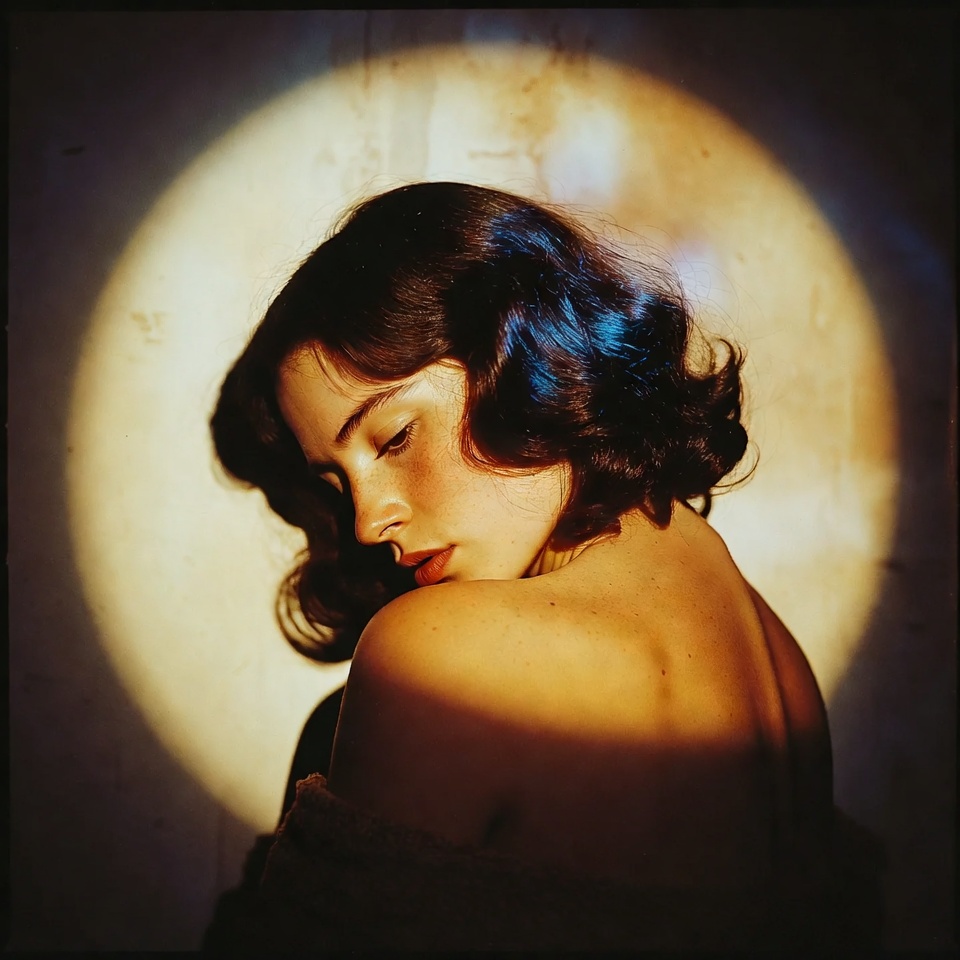
Vintage 70s Film is nostalgia with chemistry: warm-leaning highlights, slightly muted shadows, gentle grain, and color that feels lived-in rather than “perfect.” Pair that with a Studio Ring Light and you get a beautifully uneasy contradiction an ultra-modern lighting signature rendered through an analog memory filter. It’s the visual equivalent of a late-night reflection: crisp where it matters, hazy where it hurts.
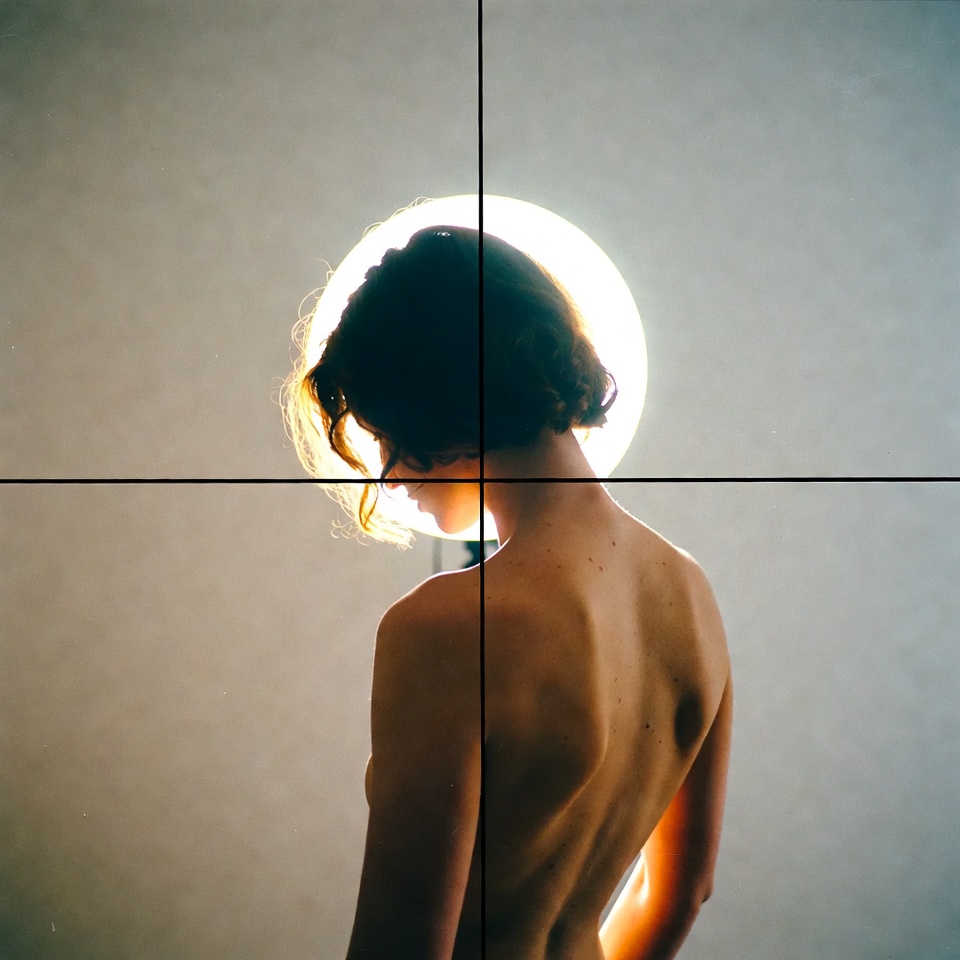
The Back View makes the melancholic mood more potent by removing the face the viewer can’t resolve the emotion, only sense it through posture and environment. With Rule of Thirds, you’re composing absence with intention: placing the subject off-center so the empty space becomes the emotional weight.
2. The Master Prompt (Copy-Paste Ready)
3. Anatomy of the Shot (Technical Deep Dive)
Why this Lighting? (Studio Ring Light)
Ring light is a “centered source” it pushes light from near the lens axis, reducing lateral shadow and producing a distinctive, modern clarity.
- Signature speculars: even in a back-view, ring light creates clean highlight bands on hair and shoulders, and can produce a soft halo on reflective fabrics.
- Flat-but-intentional modeling: because shadows are minimized, the image becomes about shape and tone rather than dramatic chiaroscuro great for quiet melancholy.
- Graphic separation: a ring can outline edges against darker backgrounds, especially if you cue subtle haze or a darker studio backdrop.
Melancholy trick: Don’t overfill. Let the ring be the key, but keep ambient low so the background falls into a subdued, filmic darkness.
Why this Angle? (Back View)
Back View shifts emotion from facial expression to gesture language:
- Shoulder slope = mood: rounded shoulders read resigned; squared shoulders read resolve; a slight head tilt reads reflective.
- Narrative ambiguity: melancholy thrives on what’s unsaid; the unseen face becomes the missing information.
- Period authenticity: 70s portraiture often leaned into observational, candid framing back view feels documentary-adjacent.
Direction cue: Add a subtle “head turned slightly” while staying back view to suggest longing without revealing identity.
Why this Composition? (Rule of Thirds)
Rule of Thirds makes melancholy feel composed, not accidental:
- Off-center isolation: placing the subject on a third line creates psychological distance.
- Negative space becomes subtext: the empty two-thirds can hold grain, color cast, and quiet texture like a memory you can’t fully enter.
- Eye-path control: the viewer finds the subject first, then drifts into the emptiness, extending the emotional aftertaste.
Implementation: Put the subject on the left third, looking into the open space to the right (or vice versa). “Looking into space” reads more contemplative than “looking out of frame.”
4. Color Palette & Aesthetics
Suggested Color Palette (70s Melancholy):
- Warm amber / tobacco brown (highlights)
- Olive green / desaturated teal (midtones)
- Deep umber / faded charcoal (shadows)
Optional accent: muted mustard or dusty maroon for era authenticity.
Textures to expect (or encourage):
- Fine to medium film grain
- Slight color fade and soft contrast roll-off
- Fabric texture: corduroy, wool, denim, or matte leather
5. Pro Tips for Refinement
Tip 1 (Stylization):
- If the result feels too “clean digital ring light,” push it deeper into analog:
- Midjourney: keep
--style rawbut try--stylize 150–250(250 is good) and add optional cues like “film scan,” “color fade,” “light leaks” (use sparingly).
- Midjourney: keep
- If the image gets too vintage (muddy skin tones), reduce stylization:
--stylize 75–150and specify “natural skin tones” (optional).
Tip 2 (Subject Matter):
- Melancholy + back view works best with strong silhouette design: longer hair, a coat collar, a scarf, a hat elements that read emotion through shape.
- Props that reinforce 70s authenticity without clutter: cassette player, rotary phone, cigarette smoke (tasteful), vinyl sleeve use one, not many.
6. FAQ (Rich Snippet Optimized)
Q: Can I use this prompt for a front-facing portrait and keep the same vibe?
A: Yes swap “Back View” for “front view” and keep the ring light, but reduce symmetry by maintaining rule-of-thirds placement to preserve melancholy.
Q: What creates the Melancholic feeling in this shot?
A: It’s the combination of withheld identity (back view), controlled off-center composition (rule of thirds), and low-ambient ring light clarity filtered through 70s film grain and faded color response.