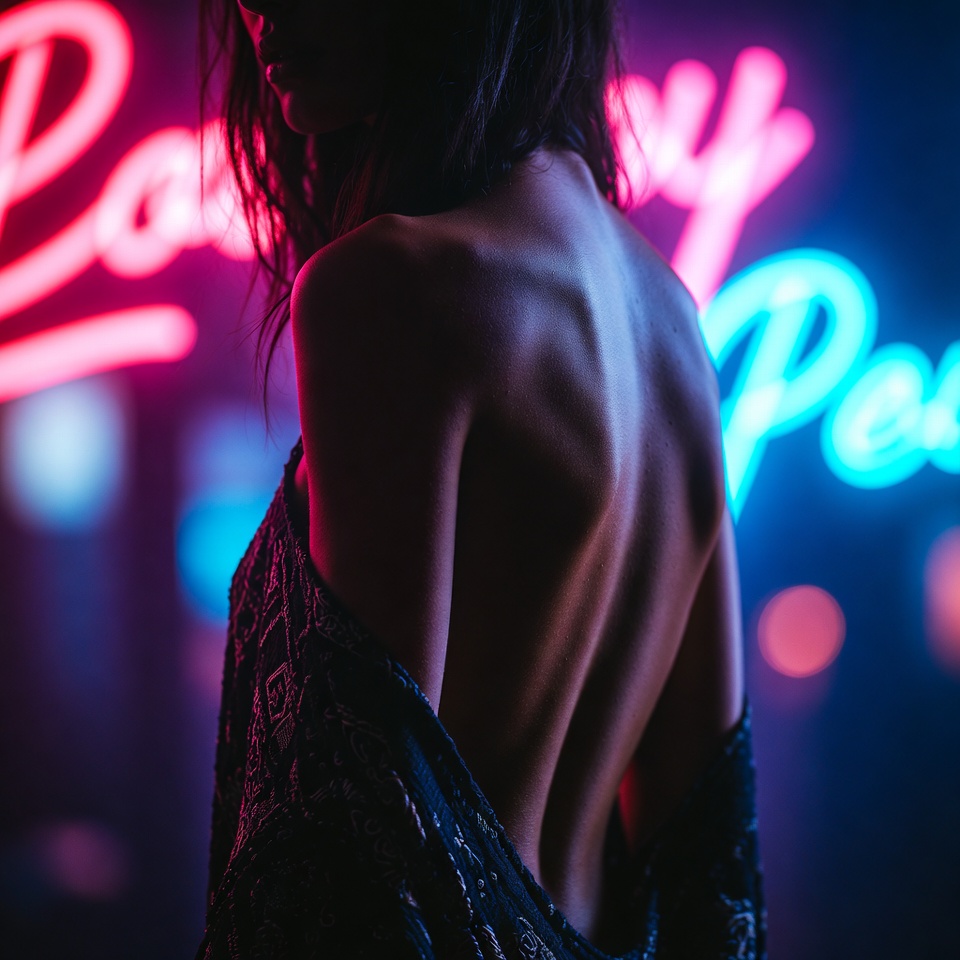
1. The Artistic Vision
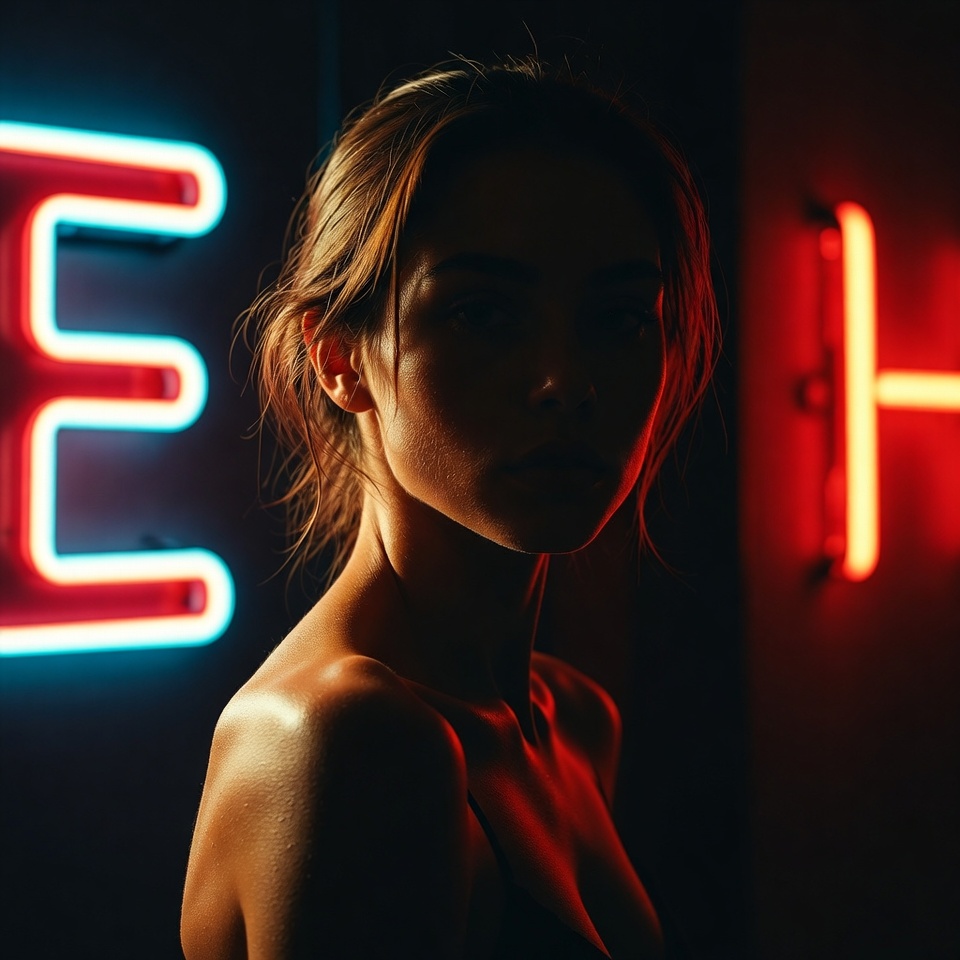
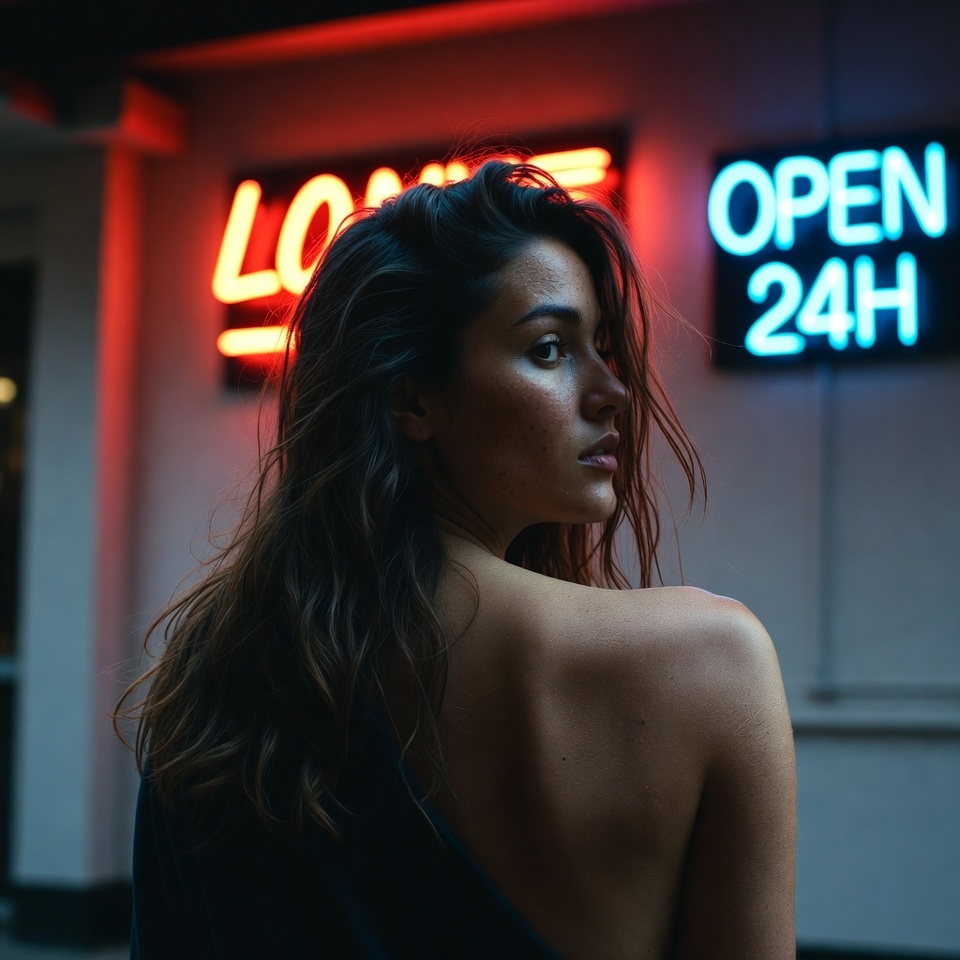
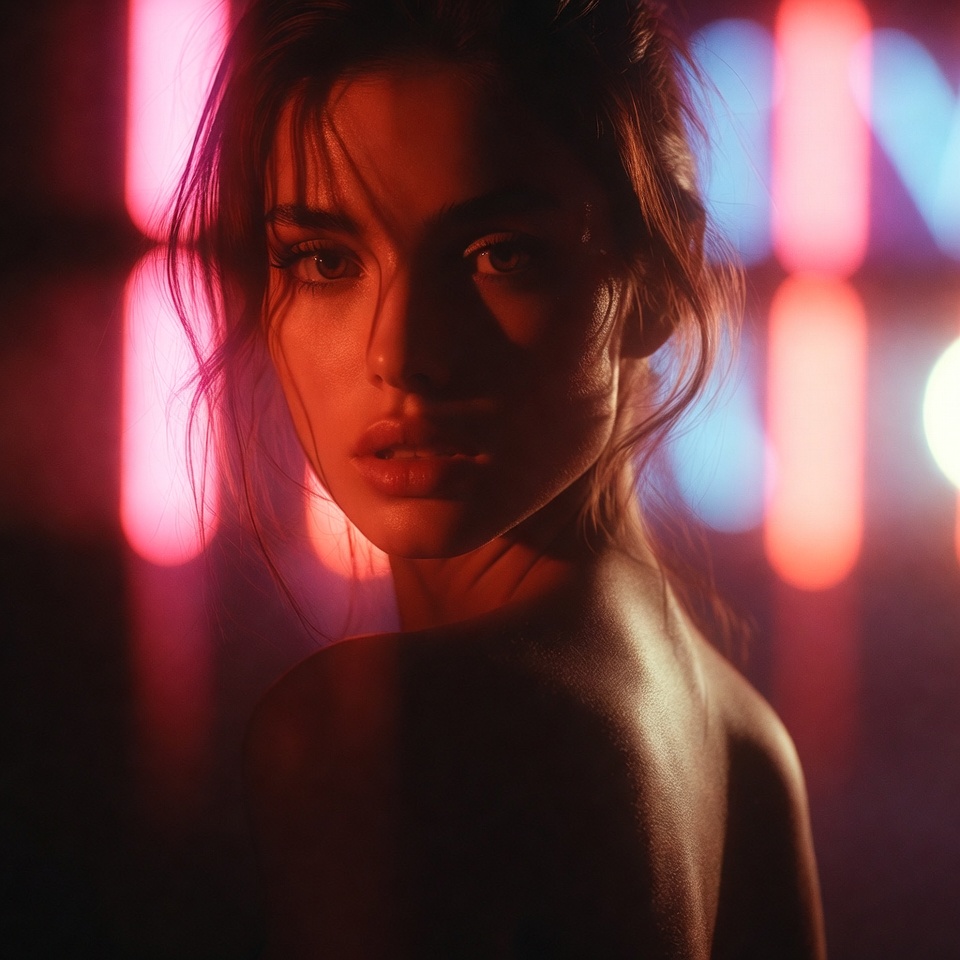
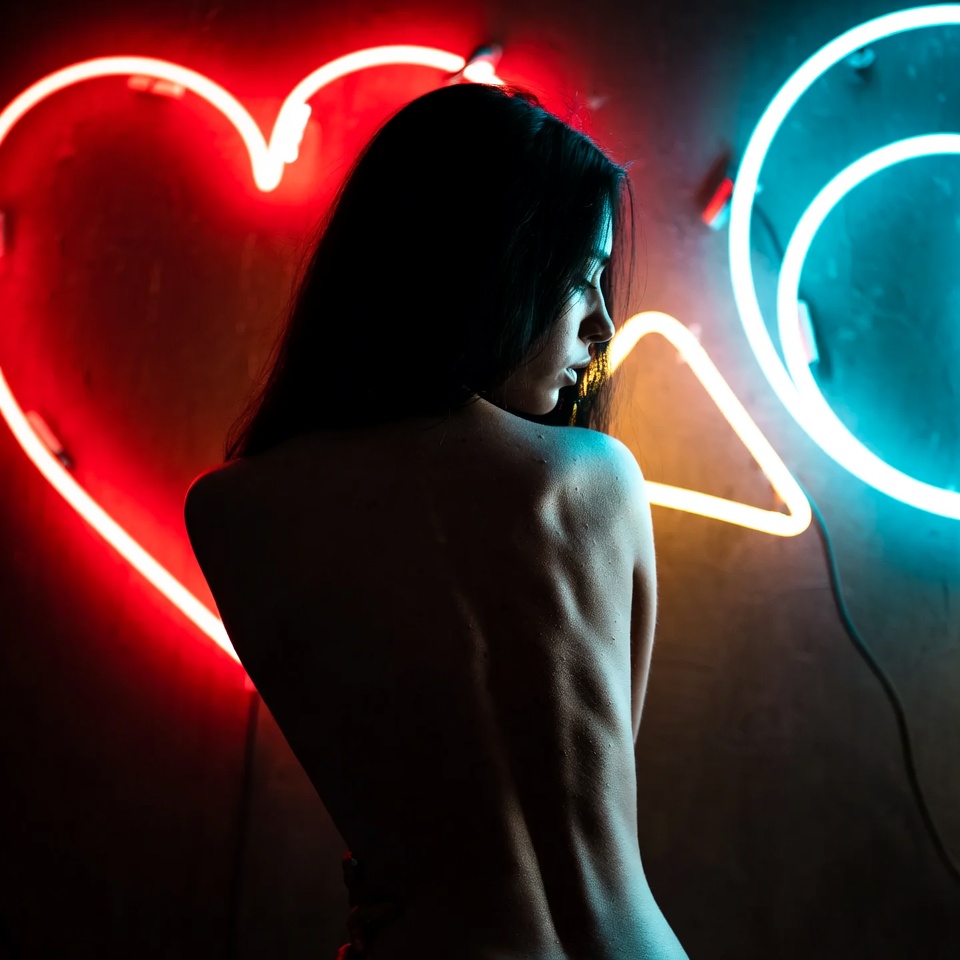
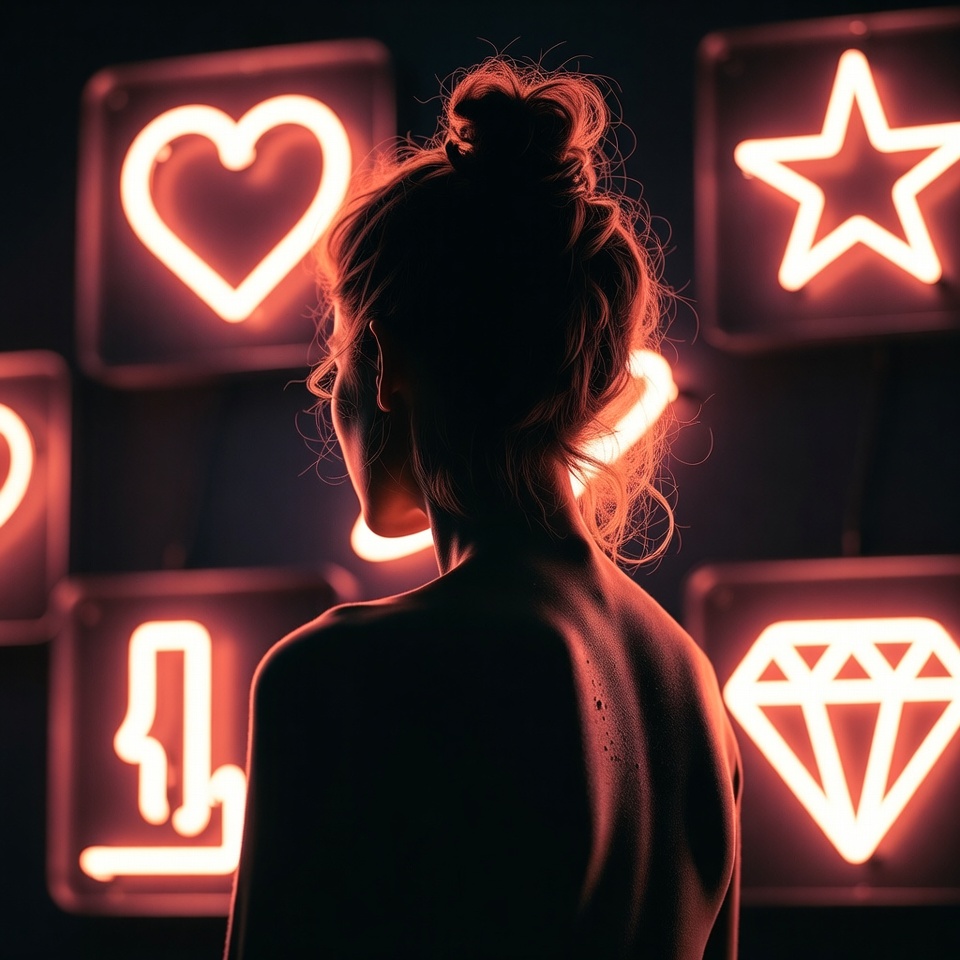
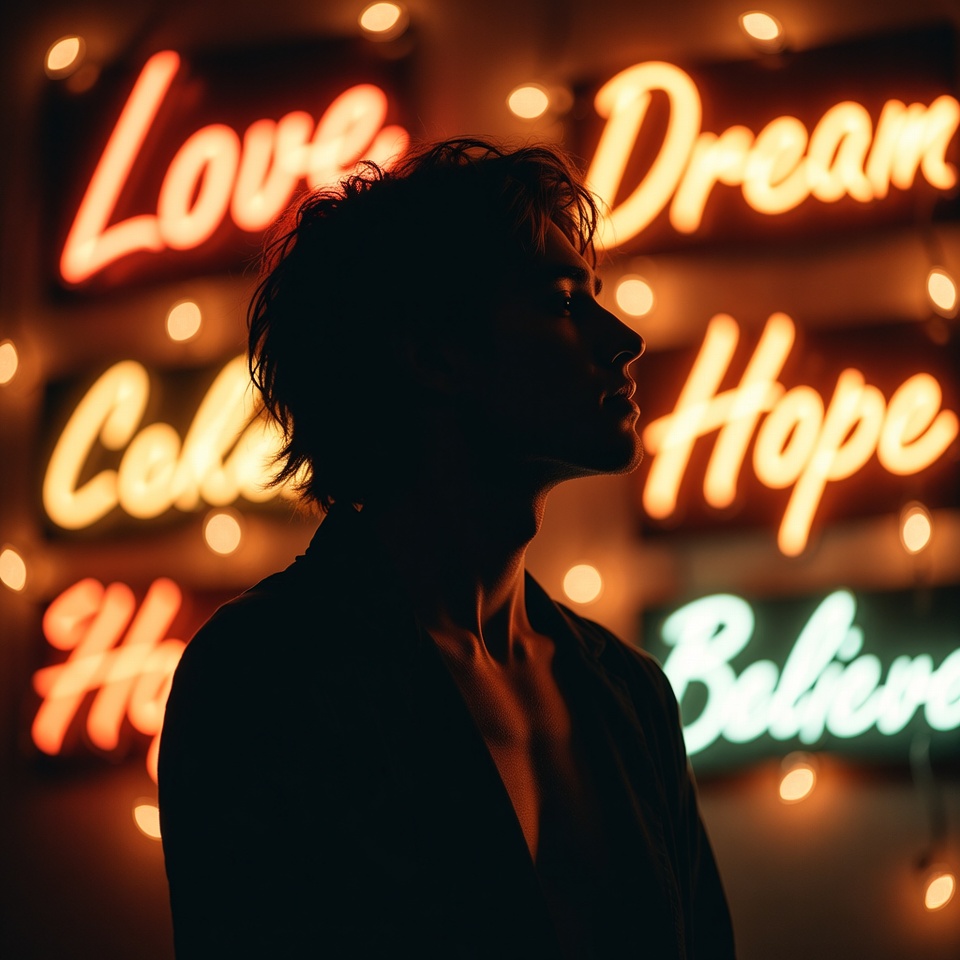
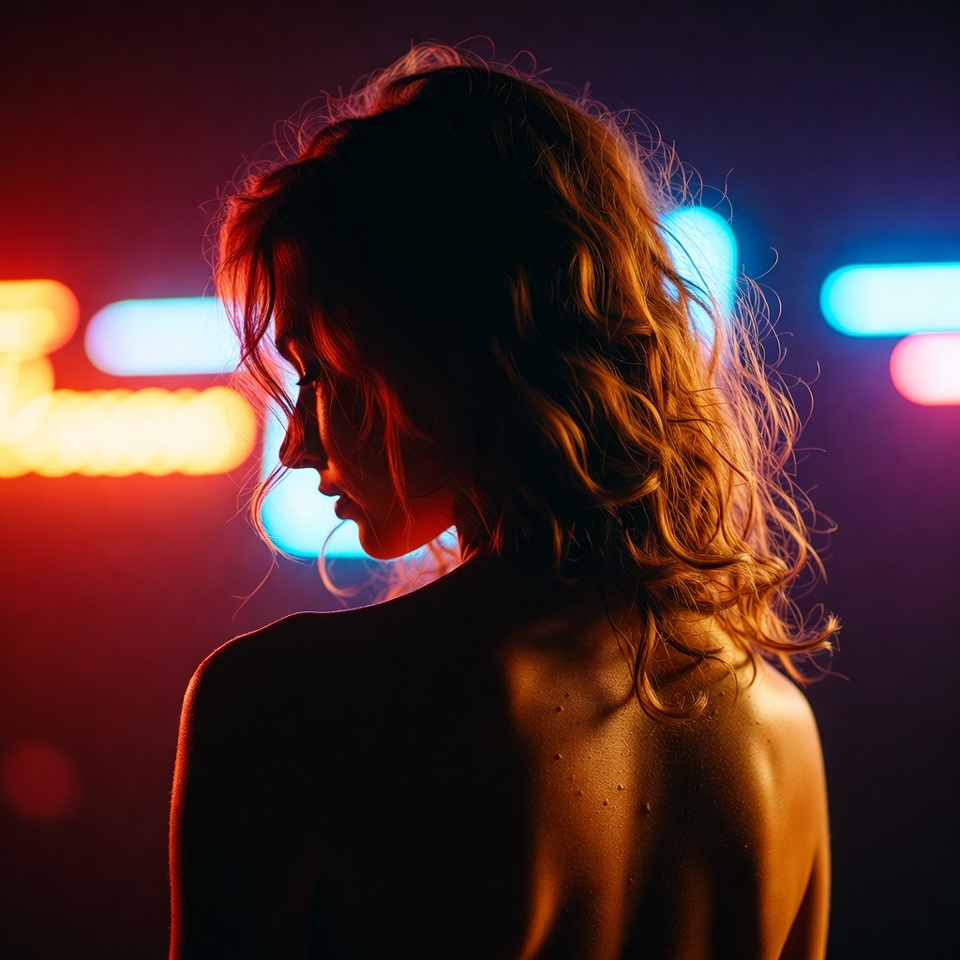
The Indie Movie Look is emotional realism with deliberate imperfection: soft contrast, filmic grain, imperfect practical light, and a sense that the scene existed before the camera arrived. Add Neon Signs and the image becomes romantic in a very specific way less “fairytale,” more “2 a.m. tenderness,” where color spills across fabric and skin like memory.
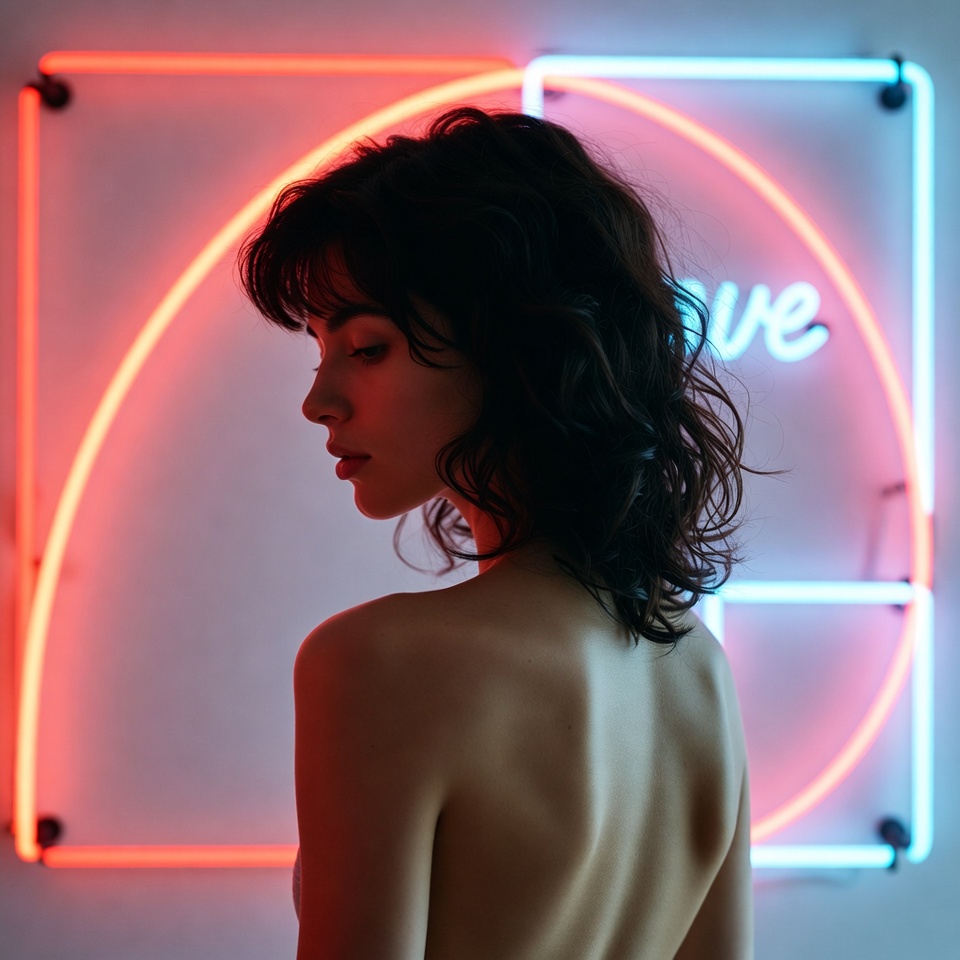
A Back View amplifies intimacy by withholding identity. You’re not photographing a face you’re photographing a moment: posture, distance, and the glow of a city’s signage doing the speaking. With the Golden Ratio, the frame stops feeling random and starts feeling authored: casual, but uncannily cinematic.
2. The Master Prompt (Copy-Paste Ready)
3. Anatomy of the Shot (Technical Deep Dive)
Why this Lighting? (Neon Signs)
Neon signage is practical lighting with built-in mood design:
- Spectral color separation: saturated reds, magentas, cyans, and greens create immediate emotional temperature shifts.
- Directional spill: neon often behaves like a lateral key + ambient fill, wrapping edges and creating soft gradients across shoulders and hair.
- Narrative authenticity: it implies location and story (street corner, late-night diner, cinema marquee) without needing a literal background.
Control note: If neon turns skin unnatural, cue “subtle neon spill” or “balanced skin tones” while keeping the signage glow.
Why this Angle? (Back View)
Back View is romantic because it’s private:
- Anonymity = universality: viewers project themselves into the scene.
- Gesture becomes the face: head tilt, shoulder angle, distance from the light source these carry the emotion.
- Indie language: it reads observational, like a candid frame pulled from a narrative sequence.
Direction cue: “Slight head turn, still back view” gives longing without breaking the concept.
Why this Composition? (Golden Ratio)
Golden Ratio composition feels natural yet intentional perfect for an indie aesthetic that wants design without looking “designed.”
- Spiral attention path: the eye enters via negative space, rides the neon glow, then lands on the subject’s silhouette.
- Balanced asymmetry: romance benefits from a little imbalance; the Golden Ratio provides it with elegance.
- Cinematic blocking: it mimics how directors stage characters against practical light sources.
Implementation: Place the subject near the spiral focal point; let the neon sign live along the larger curve, so light becomes the compositional guide.
4. Color Palette & Aesthetics
Suggested Color Palette (Neon Indie Romance):
- Deep midnight blue / charcoal base
- Magenta-pink + electric cyan neon accents
- Supporting warmth: soft tungsten amber (tiny hints to keep romance human)
Textures to expect (or encourage):
- Fine film grain and slight halation around neon
- Soft contrast roll-off (avoid HDR harshness)
- Materials: denim, cotton, worn leather, rain-sheened surfaces for light scatter
5. Pro Tips for Refinement
Tip 1 (Stylization):
- For a truer “indie still” (less glossy, more believable): try
--stylize 75–150. - For more dreamlike romance while keeping realism:
--stylize 200–300(your 250 is a strong sweet spot). - If adapting to Stable Diffusion: keep CFG moderate (roughly 5–7) and rely on film-grain/halation styling rather than high CFG to avoid plastic skin.
Tip 2 (Subject Matter):
- Romance reads best through actionable micro-narratives: holding a jacket, clutching a movie ticket, hands in pockets, a subtle lean toward the light.
- Wardrobe that catches neon cleanly: dark coat, satin bomber, simple dress, wet hair high edge contrast makes the back-view silhouette iconic.
6. FAQ (Rich Snippet Optimized)
Q: Can I use this prompt for “Neo-noir” instead of Indie Movie Look?
A: Yes swap the style term to “neo-noir” and increase contrast while keeping neon practical light and Golden Ratio placement for cinematic structure.
Q: What creates the Romantic feeling in a back-view neon portrait?
A: Romance comes from withheld identity (back view), neon spill as emotional color language, and Golden Ratio staging that makes the moment feel quietly inevitable like a scene mid-story.