1. The Artistic Vision
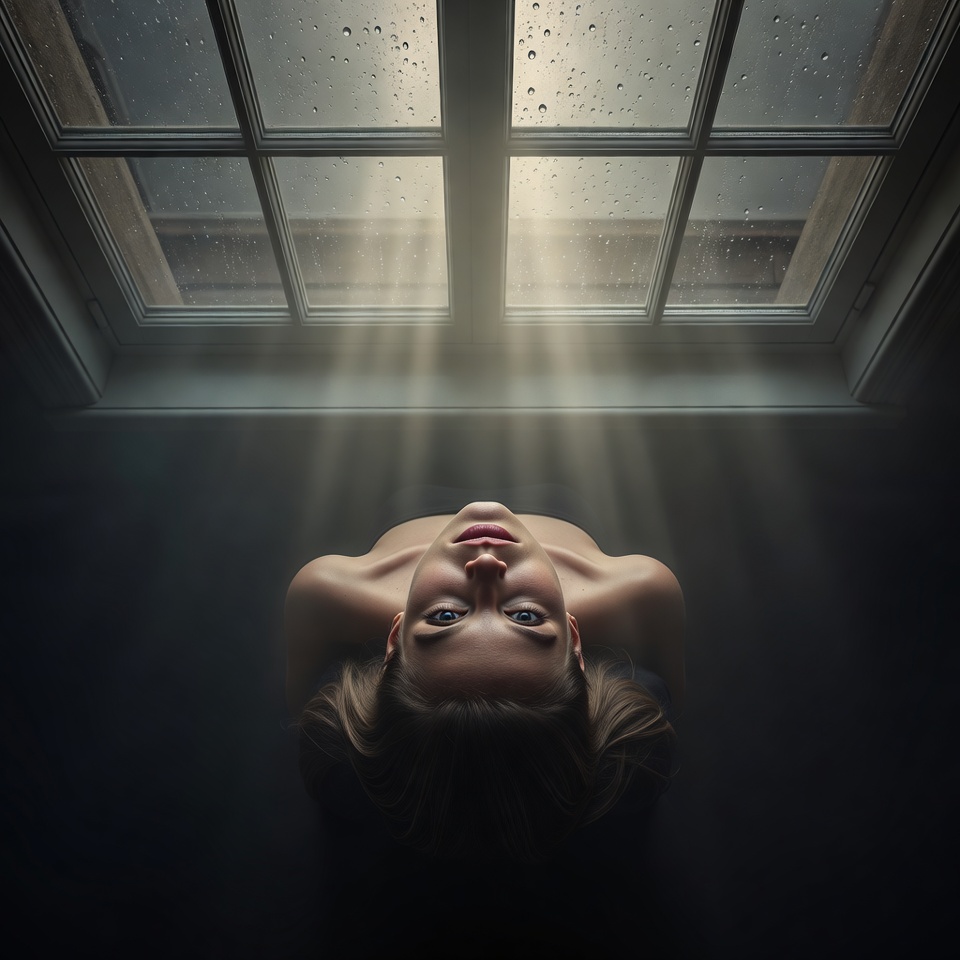
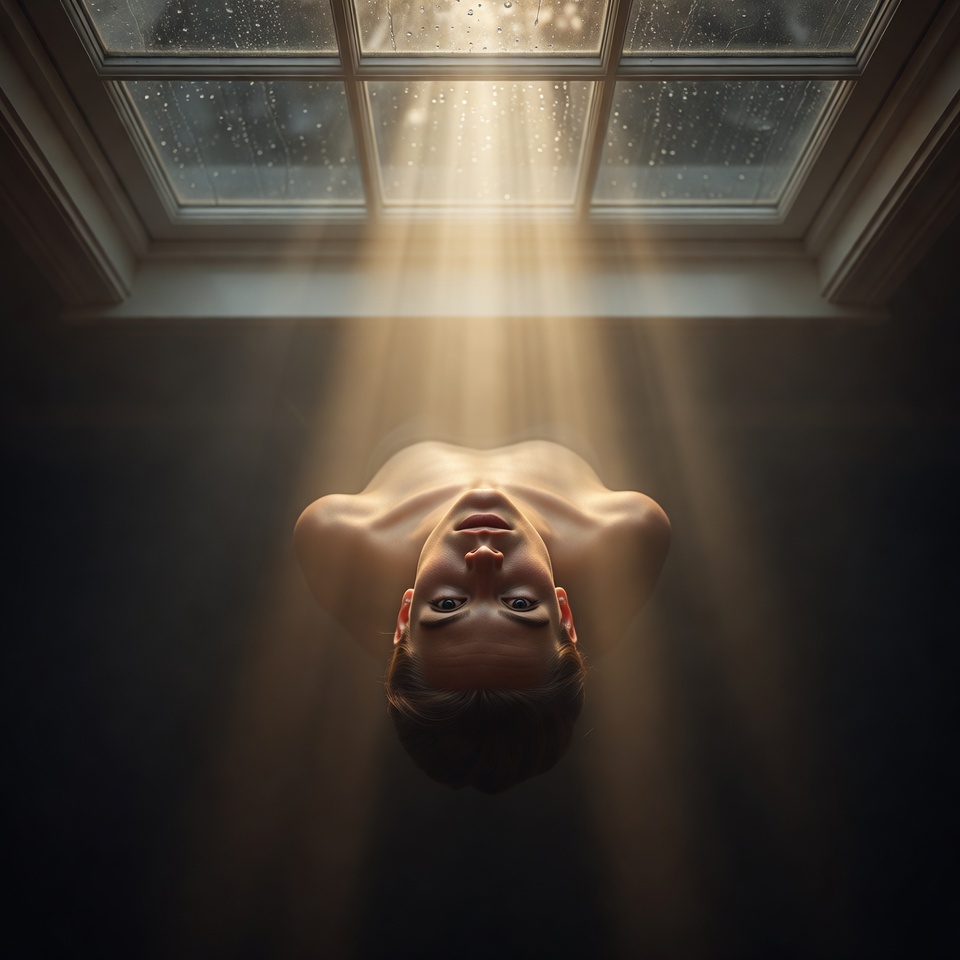
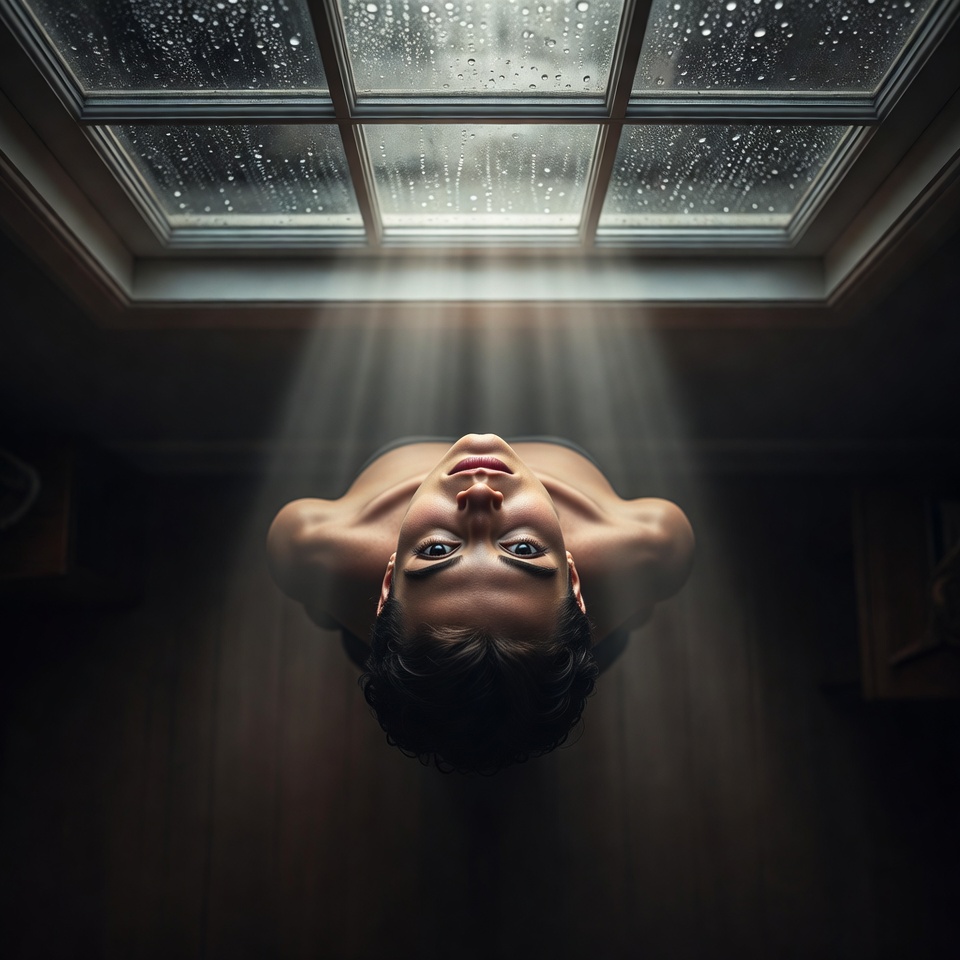
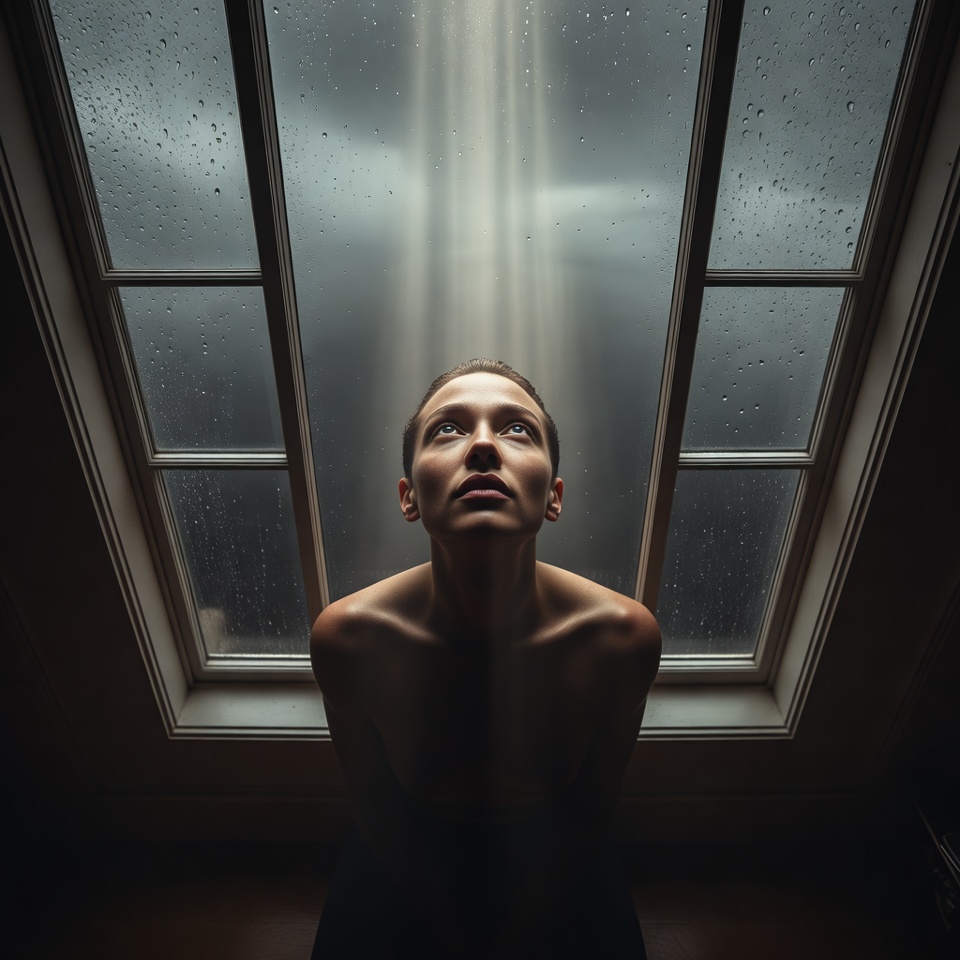
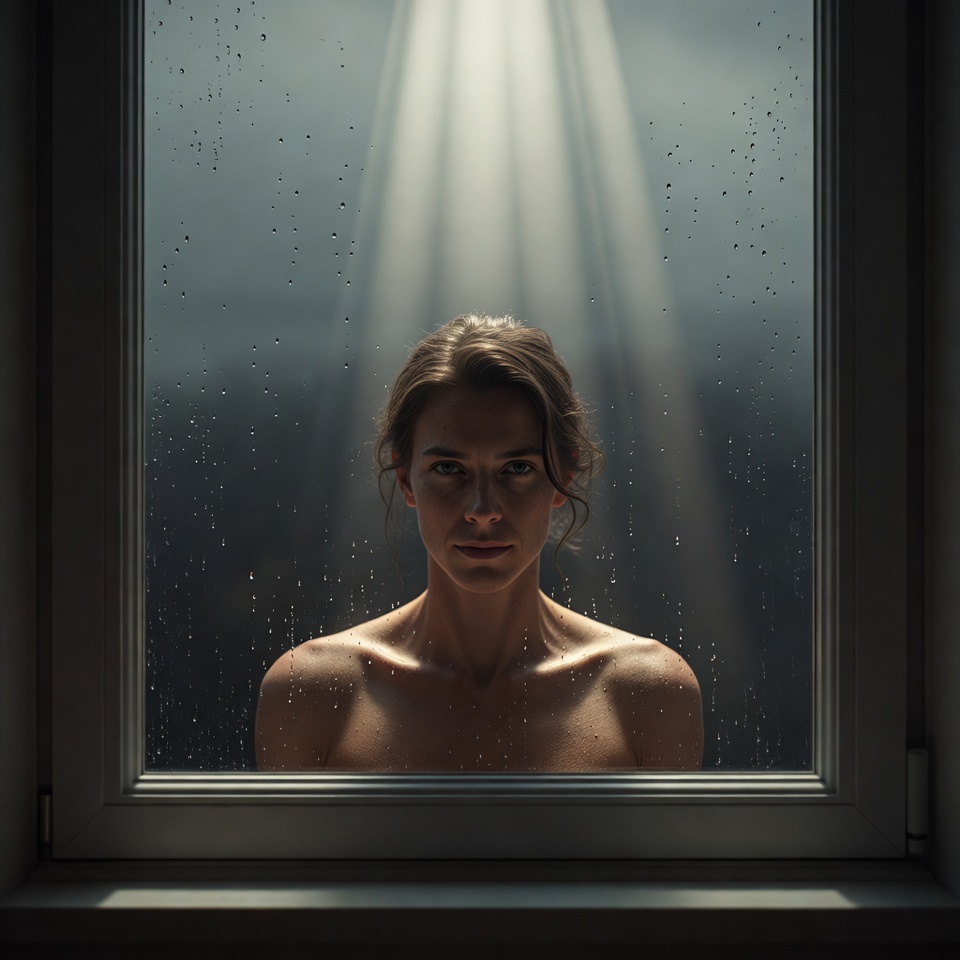
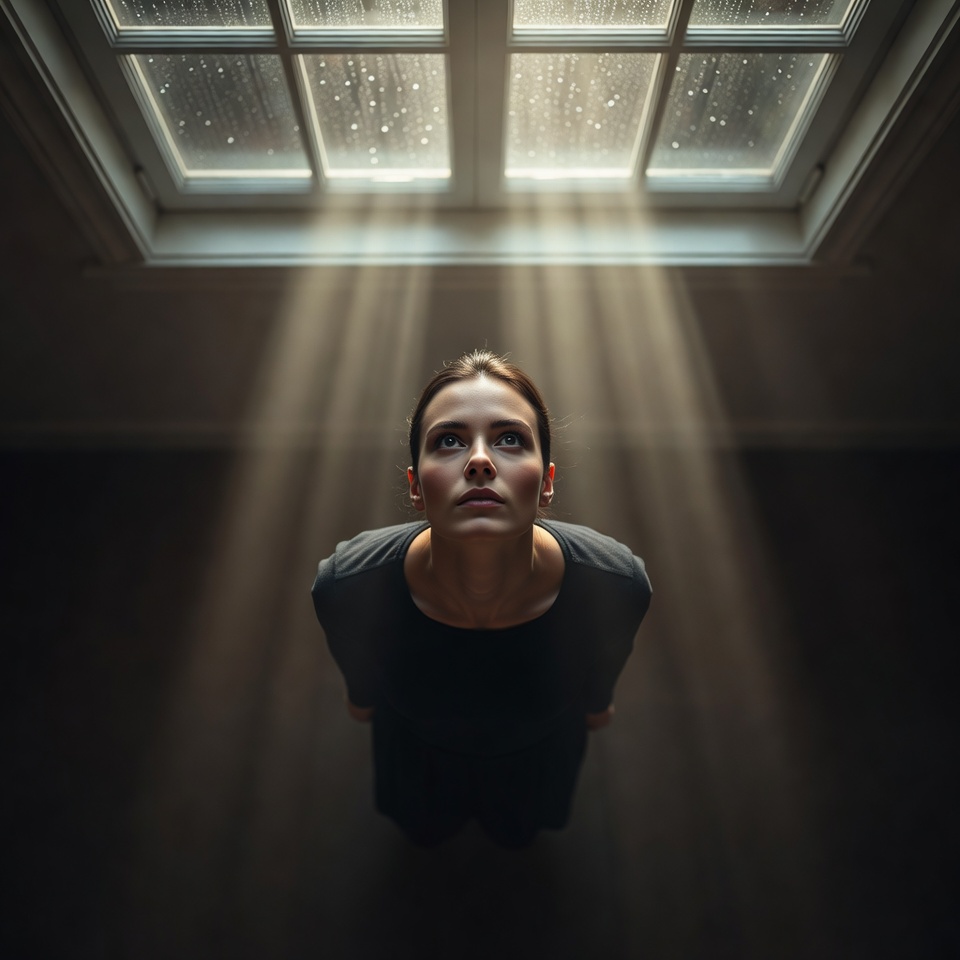
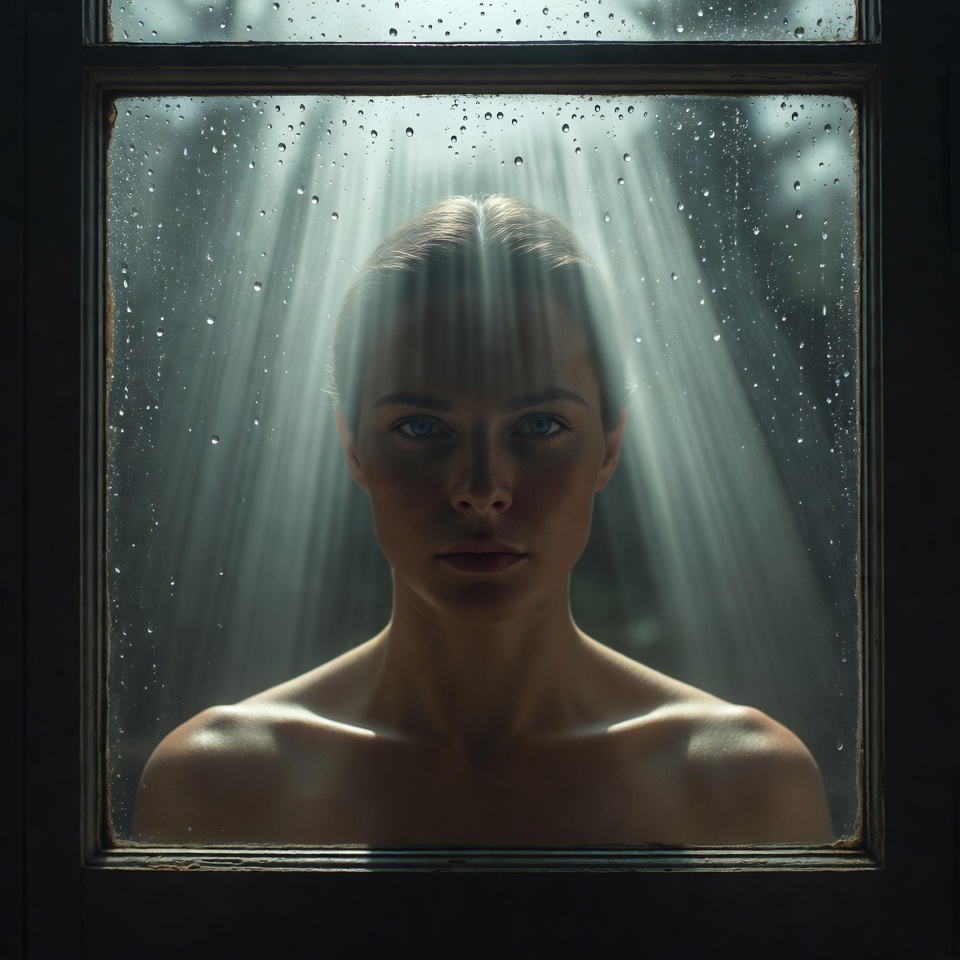
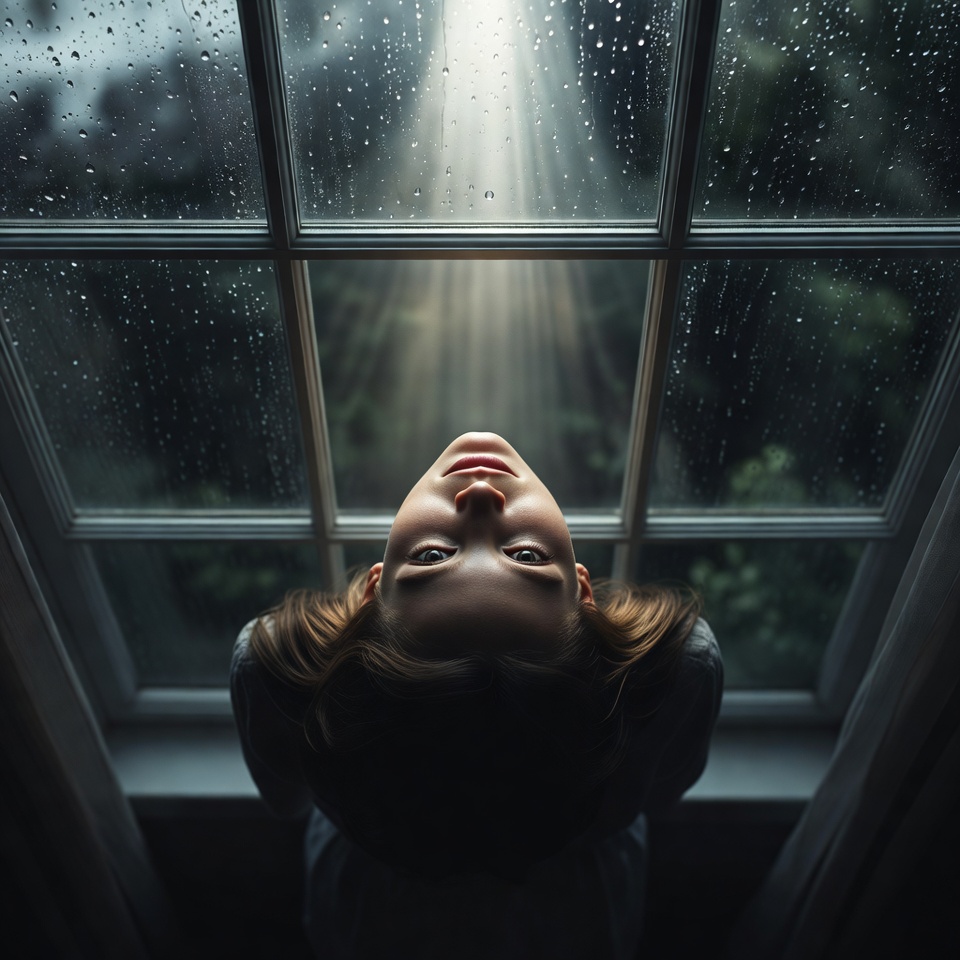
A Rainy Day Window scene is inherently refined: soft diffusion, specular raindrop highlights, and a controlled tonal range that reads premium. When you introduce God Rays (Volumetric), the image gains engineered dimensionality light becomes a tangible structure rather than a flat exposure. Combine that with Center Symmetrical composition and a Bird’s Eye View, and the result feels like a high-end brand still: organized, intentional, and architecturally precise.
“Professional” here doesn’t mean sterile. It means clarity, hierarchy, and restraint a disciplined visual system where the atmosphere (rain + rays) supports the subject instead of overwhelming it.
2. The Master Prompt (Copy-Paste Ready)
3. Anatomy of the Shot (Technical Deep Dive)
Why this Lighting: God Rays (Volumetric)
Volumetric light works because it adds a third layer to the image: air as a surface.
- Depth encoding: rays create visible distance markers, turning background space into measurable volume.
- Directional authority: the light “points” the viewer’s attention, which is exactly what a professional image needs clear visual leadership.
- Controlled drama: unlike harsh contrast, volumetrics can be dramatic while still maintaining smooth gradients and clean skin rendering.
To keep it professional, the rays should be narrow and coherent, not chaotic. Think “studio haze + window beam,” not “fantasy spotlight storm.”
Why this Angle: Bird’s Eye View
A bird’s eye view imposes design logic:
- It turns the subject and environment into layout, making symmetry and geometry read instantly.
- It reduces emotional noise from facial dominance and instead emphasizes form, styling, and spatial order.
- It signals “art-directed” content common in premium editorial and product-adjacent portraiture.
If you want the subject to remain clearly “portrait-forward,” the strongest bird’s-eye variant is a gentle overhead, not a perfectly vertical top-down.
Why this Composition: Center Symmetrical
Center symmetry is a professionalism cheat-code:
- Instant hierarchy: the center is unambiguous; the viewer knows what matters.
- Brand-friendly calm: symmetry communicates stability, control, and confidence.
- Pairs perfectly with window architecture: mullions, frames, and rain streak patterns naturally support bilateral balance.
The “frame” in the scene can be literal (window frame) or implied (light rays forming a centered corridor).
4. Color Palette & Aesthetics
Recommended Color Palette: Cool Slate + Soft Silver + Warm Beam Highlights
- Slate blues/greys for rainy ambiance
- Silver-grey reflections for droplets and glass sheen
- A restrained warm accent in the rays (champagne/soft amber) to prevent the scene from feeling cold
Textures to expect
- Raindrop speculars on glass
- Soft atmospheric haze for volumetric beams
- Clean, editorial surfaces (polished wood, matte stone, minimal fabrics)
- Subtle film grain if you want cinematic credibility without reducing clarity
5. Pro Tips for Refinement
Tip 1: Stylization and realism control
- Midjourney:
- More corporate/editorial clean:
--stylize 75–150 - More cinematic atmosphere (still pro):
--stylize 200–350
- More corporate/editorial clean:
- Stable Diffusion:
- Keep structure crisp with
cfg_scale ~ 5–7 - If rays become messy, lower CFG slightly and add “controlled volumetric beams, minimal haze.”
- Keep structure crisp with
Tip 2: Subject and set choices that read professional
- Wardrobe that supports symmetry: structured collars, clean lines, neutral tones (charcoal, navy, cream).
- Use a single dominant window source; avoid multiple competing light directions.
- Keep props minimal and geometric (book, laptop silhouette, cup) if you include them symmetry collapses when clutter enters.
6. FAQ
Q: Can I use this prompt for Corporate Branding Photography?
A: Yes keep everything and replace “Rainy Day Window” with “modern office window scene” for a more explicitly corporate context while preserving the volumetric professionalism.
Q: What creates the Professional feeling in this shot?
A: Professionalism comes from center symmetry (hierarchy and control), bird’s eye structure (art-directed geometry), and coherent volumetric rays that guide attention without visual chaos.